About Underground
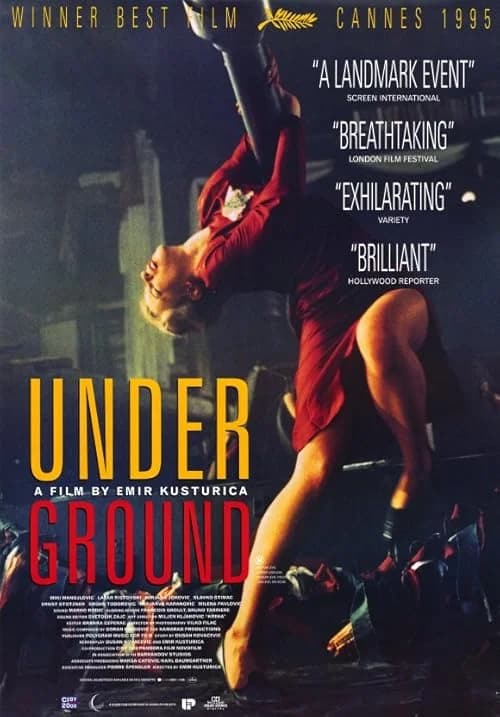
Emir Kusturica's 'Underground' (1995) is a monumental cinematic achievement that defies simple categorization. This Palme d'Or-winning epic blends comedy, drama, fantasy, and war elements into a sprawling narrative that chronicles Yugoslav history from World War II through the Balkan conflicts. The film follows charismatic black marketeers Marko and Blacky as they profit from selling weapons to Communist resistance fighters while living lavishly in occupied Belgrade.
The performances are extraordinary, particularly Lazar Ristovski as the pragmatic Marko and Miki Manojlović as the passionate Blacky. Their complex friendship forms the emotional core of this three-hour odyssey. Kusturica's direction is both chaotic and precise, creating a surreal, carnivalesque atmosphere where tragedy and comedy coexist in every frame.
What makes 'Underground' essential viewing is its unique approach to historical storytelling. Rather than presenting a straightforward narrative, Kusturica employs magical realism, exaggerated characters, and absurd situations to explore how myths are created and nations are built on deception. The film's famous underground sequences, where characters remain hidden for decades believing the war continues, serve as powerful metaphors for political manipulation and historical amnesia.
With its energetic brass band score, unforgettable visual imagery, and profound commentary on the cycles of violence and betrayal, 'Underground' remains one of cinema's most ambitious and rewarding experiences. Viewers should watch this masterpiece to witness how film can simultaneously entertain, provoke, and illuminate complex historical truths through artistic vision.
The performances are extraordinary, particularly Lazar Ristovski as the pragmatic Marko and Miki Manojlović as the passionate Blacky. Their complex friendship forms the emotional core of this three-hour odyssey. Kusturica's direction is both chaotic and precise, creating a surreal, carnivalesque atmosphere where tragedy and comedy coexist in every frame.
What makes 'Underground' essential viewing is its unique approach to historical storytelling. Rather than presenting a straightforward narrative, Kusturica employs magical realism, exaggerated characters, and absurd situations to explore how myths are created and nations are built on deception. The film's famous underground sequences, where characters remain hidden for decades believing the war continues, serve as powerful metaphors for political manipulation and historical amnesia.
With its energetic brass band score, unforgettable visual imagery, and profound commentary on the cycles of violence and betrayal, 'Underground' remains one of cinema's most ambitious and rewarding experiences. Viewers should watch this masterpiece to witness how film can simultaneously entertain, provoke, and illuminate complex historical truths through artistic vision.